Red Dot
Awards are strange things. They celebrate a finished project, but they rarely tell the story of the people behind it. They don’t show the conversations, the experiments, the failures, or the countless hands that shaped the final result.
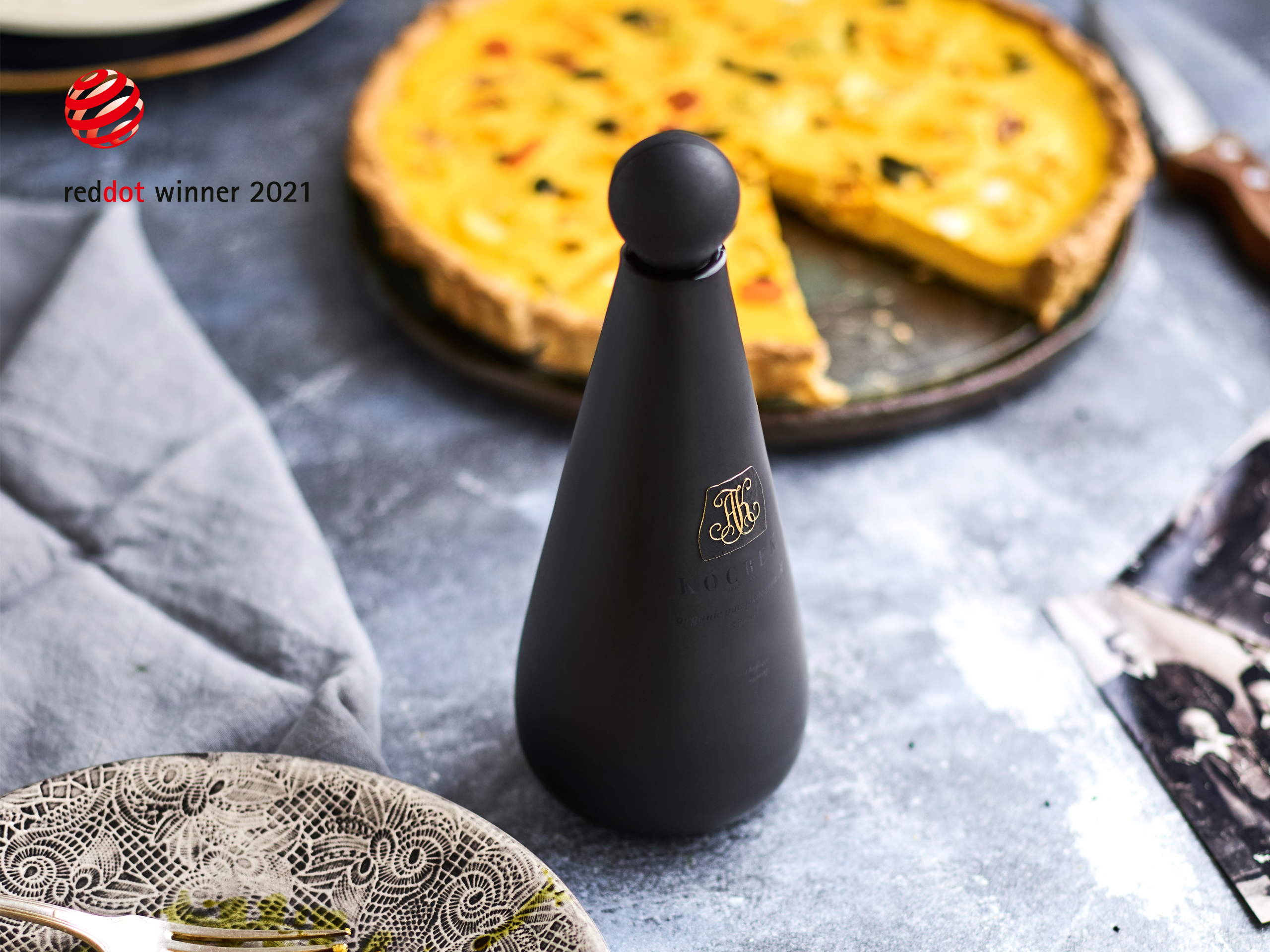
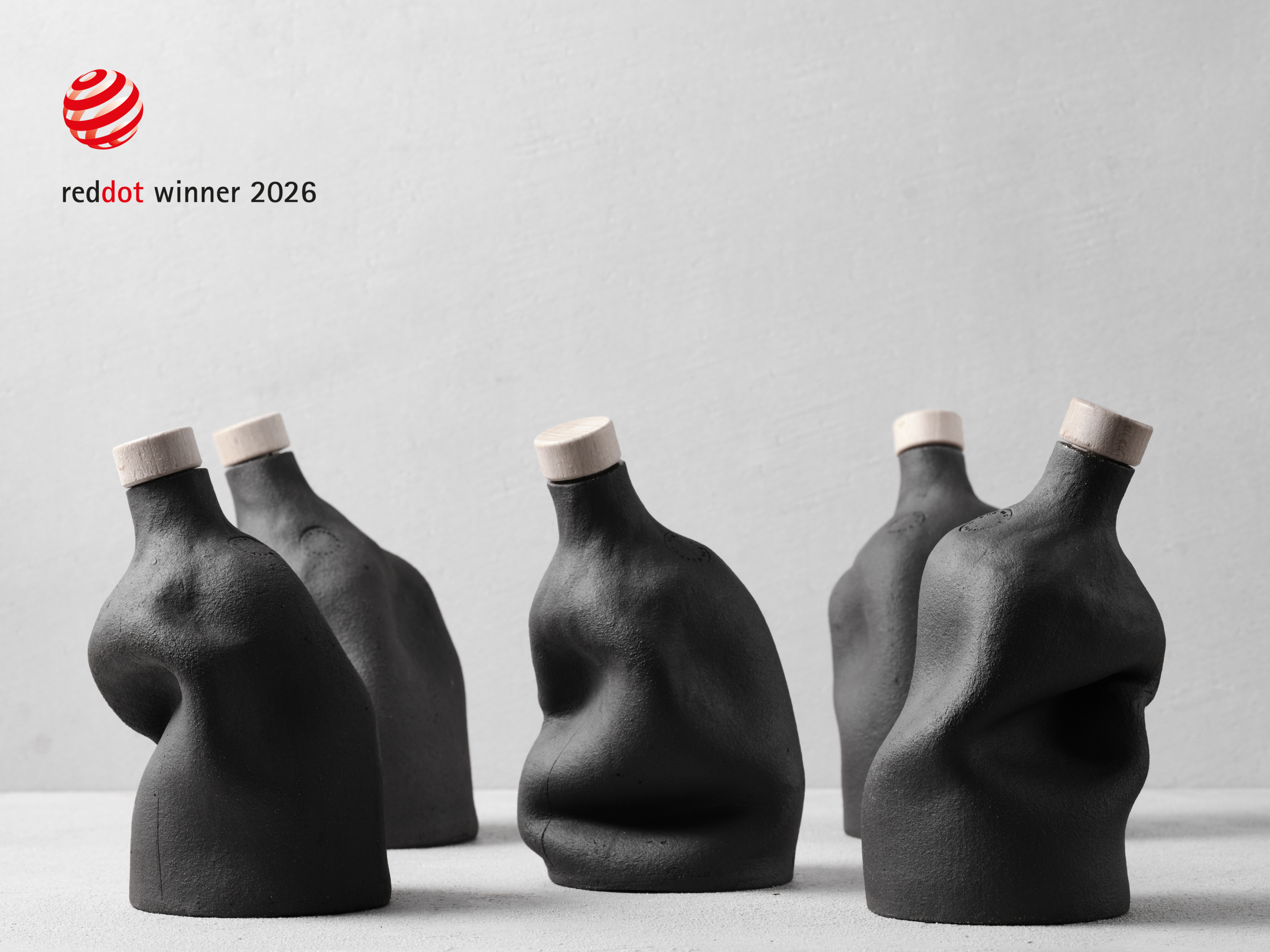
Design awards and collaboration are rarely discussed together — but they should be. Every award we’ve received points not to a single author, but to a room full of people who cared too much to cut corners. Design awards and collaboration, when you trace them back, are really just evidence that the right people trusted each other at the right moment.
I’ve been fortunate to receive Red Dot Awards—exactly for these two that deserved them.
The first was for Kocbek. The second for Midva Vidva Onadva.
They couldn’t be more different. Different products. Different challenges. Different aesthetics. Yet they share something that matters far more than the award itself.
Both projects were built with extraordinary people.
From the very beginning, I wanted them to be exceptional—not because I was chasing another trophy, but because they deserved the highest level of care. Every detail was questioned. Every material mattered. Every decision was made by people who genuinely cared about their craft.
The Red Dot came later.
It simply confirmed what we already knew: when talented people trust one another and obsess over every detail, the work has a chance to become timeless.
These awards remind me that I am the designer that I always wanted to be.
They remind me that the best projects are never created alone. They are built by people who bring different skills, different perspectives, and the same commitment to making something worth remembering.
That’s what I see when I look at these two Red Dots.
Not trophies.
But the fingerprints of remarkable craftspeople.
Don’t miss the next essay. Signup for our newsletter
⸻ Newsletter signup
Ai killed the lorem ipsum
AI killed lorem ipsum quietly, somewhere between the first GPT prompt and the moment clients started sending actual copy on day one. We noticed it not as a loss but as a correction — design built around real words is harder, more honest, and significantly better. That's the shift AI killed lorem ipsum protecting us from confronting for decades.
The Gap
Vanishing middle designers are the most interesting people in any studio — and the first ones the industry stops talking about. The gap between junior promise and senior authority isn't new, but it's getting harder to cross, and we've been watching it happen up close for twenty years. What follows is what that looks like from where we sit.
The Worst Kind of Project
Unrealized design projects are, without question, the worst thing that happens to a studio. Not the difficult client. Not the impossible brief. The work you believed in completely — refined, presented, defended — that simply never saw the light. We've built 81 logos and collected over 80 awards, and still, it's the unrealized design projects that occupy the most space in the room.
Logo Design vs Brand Identity: What’s the Difference?
Logo design vs brand identity — we get asked to explain the difference on almost every first client call. A logo is a mark. A brand identity is the entire system that gives that mark meaning across every surface it touches. We've spent twenty years building both, and the gap between them is where most projects either hold together or fall apart.
I’ve seen inspiration exploding to space
Creative inspiration process isn't something we manage — it's something we survive. The ideas that actually change a project don't arrive through briefs or brainstorms. They detonate. Understanding where ideas come from in design means accepting that the creative inspiration process runs on its own schedule, not yours.
What is the one positive impact the brand wants to have
Brand positive impact is the question we ask before anything else — before colour, before form, before the first mark on paper. Not what the brand sells, but what shift it causes in the people who encounter it. That single answer, when we find it, becomes the gravitational centre everything else orbits.
The B.R.A.I.N. Model
The B.R.A.I.N. model design framework didn't come from a textbook — it came from twenty years of asking why certain marks hold attention and others dissolve. We built it to make our cognitive design process repeatable without making it mechanical. Every project we take on runs through this model, and the B.R.A.I.N. model design decisions it surfaces are the reason our work earns results beyond aesthetics.
Hell Yes
Hell yes creative approach is how we decide what to make — and what to walk away from. If a project doesn't produce that immediate, visceral pull, we don't take it. That filter, applied consistently since 2004, is the reason our work holds together as a body rather than a portfolio of compromises.